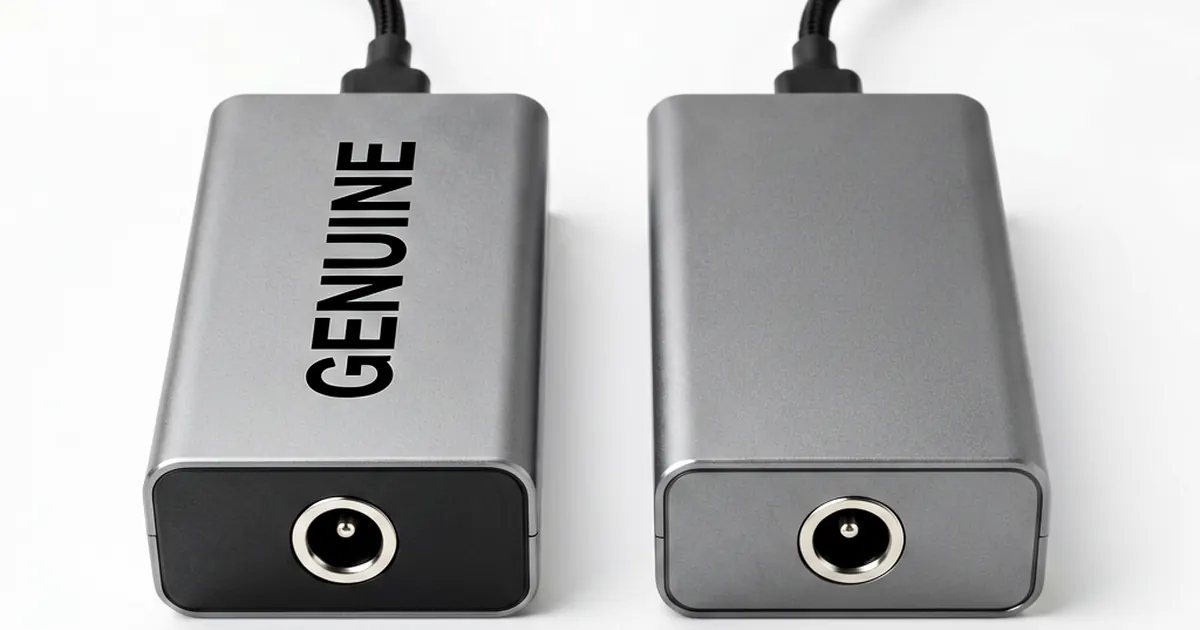
OEM vs Aftermarket Laptop Parts — What's the Difference?
Choosing replacement parts is stressful. You want a fix that lasts without breaking the client's budget.
The term OEM refers to Original Equipment Manufacturer components; these are the exact same part numbers used during factory assembly. Aftermarket parts are third-party alternatives designed for compatibility but produced by different entities.
Deciding between them requires technical judgment. Getting it wrong can lead to motherboard damage or voided warranties.
Understanding OEM Standards
OEM components provide the highest level of certainty because they meet exact factory specifications. When you source a Genuine Original HP Pavilion DV7 HDX18t Laptop Battery, you are installing the same hardware that shipped with the unit from the factory. This eliminates guesswork regarding voltage tolerances or physical dimensions.
Precision matters in high-end machines. Many modern laptops use proprietary communication protocols to manage power delivery and thermal throttling; therefore, using a non-compliant part can trigger system errors or prevent the device from booting entirely.
Compatibility is often documented by specific manufacturer codes. If you match the exact SKU, the risk of installation failure drops toward zero percent.
When Aftermarket Parts Work
Not every repair requires an original part to be successful. Mechanical components like DC power jacks or basic keyboards are often safe to replace with third-party versions because they lack complex logic circuits. If you find a high-quality keyboard that matches the layout, your customer likely won't notice the difference.
Display panels follow a similar rule of thumb. You should always match the specific panel code rather than just the laptop model name; once the codes align, an aftermarket LCD often performs identically to the original unit. Even simple power delivery components like an Original 90W HP DV4 DV5 DV6 DV7 AC Adapter Charger New can be replaced by high-quality third-party units if the amperage and voltage pins are verified.
Budget is a major driver here. Aftermarket parts are often 30% to 60% cheaper than OEM alternatives, making them attractive for older machines with low resale value.
The Battery and Firmware Trap
Batteries are where technicians must be most cautious. Brands like Apple and Lenovo integrate smart chips into their battery modules to communicate directly with the system BIOS via a proprietary data bus. If an aftermarket battery lacks this specific firmware, the laptop may show 'unknown battery' or refuse to charge altogether.
Using uncertified batteries carries risks. A poorly regulated third-party cell can swell or overheat; this physical expansion often destroys trackpads and chassis components during use. You might save $20 on a cheap cell, but you will lose $150 in labor and structural repairs when the battery fails catastrophically.
Always check for integrated protection circuits. If the part looks suspiciously light or lacks any branding, walk away immediately.
Avoiding Counterfeit OEM Goods
The marketplace is flooded with lies. Many sellers on major online platforms list products as 'OEM' when they are actually low-grade clones. These counterfeits often use recycled cells or substandard capacitors to mimic the appearance of a genuine New Genuine Dell Precision M90 M6300 AC Adapter PA-13.
Verify the seller's reputation before every bulk order. A reputable supplier will provide detailed part numbers and clear photos of the manufacturer labels, rather than just generic stock images from a catalog.
Check the physical markings on the component. Genuine parts usually feature crisp, laser-etched text; counterfeit items often have blurry or smudged printing that looks rushed.
Warranty and Professional Liability
Replacing an OEM part with an aftermarket one can void a manufacturer's warranty. If an authorized service center inspects a machine and finds a third-party battery inside, they may deny coverage for the entire motherboard. This is particularly true if the third-party component caused any electrical surge during operation.
Technicians must communicate this risk to clients clearly. Always document whether you are using original or aftermarket parts in your repair ticket; this protects your shop if a part fails prematurely due to manufacturing defects. If you use an Original DELL Laptop AC Charger Adapter PA-3E 90W Slim, you provide the client with peace of mind that their power supply meets all safety standards.
Liability is your biggest expense. A single bad decision on a high-end workstation can wipe out an entire week of profit from smaller repairs.
Consider the end user's specific needs before choosing a path. High-performance workstations require strict OEM adherence, while budget consumer laptops allow for more flexibility with third-party components to keep costs low.
Frequently Asked Questions
Will an aftermarket battery damage my laptop?
It can if the battery lacks proper safety chips or fails to manage heat. High-quality aftermarket batteries are generally safe, but OEM parts are always the most reliable for power management.
Can I use a generic charger instead of an OEM one?
It is possible, but risky. Generic chargers may have inconsistent voltage or poor shielding, which can damage the laptop's motherboard over time.
How do I know if an 'OEM' part online is fake?
Check the seller's rating and look for specific part numbers. If the price is significantly lower than any other retailer, it is likely a counterfeit or a third-party clone.